Collagen is the protein most abundant in the human body and yet, most people are unaware of just how it is essential. It is not a trendy ingredient. It is literally what keeps your body in one piece.
To give you an idea of just how important it is: collagen accounts for around 30% of all the body’s proteins. It is found in the skin, bones, tendons, ligaments, blood vessels and many internal organs. Without it, tissues would gradually lose their ability to withstand the stresses of everyday life.
What few people realise is that its production starts to decline from the age of 25 – not 50, not 40: 25. And this decline, estimated at around 1% per year, continues silently and steadily for decades.
Faced with this observation, thousands of people are asking themselves the same questions: Is a dietary supplement based on collagen really effective? Should you choose marine or bovine? What dose? What does science actually say? The aim of this guide is to answer these questions with rigour, without hype or oversimplification.
At Sashinah, we believe that informed decisions are based on reliable information. That is why this article draws on the latest scientific evidence whilst remaining accessible to everyone.
The essentials of collagen
Key figures for collagen
To better understand the importance of collagen in the body, here are a few key points to bear in mind:
| Indicator | Value |
| The proportion of the body’s protein mass accounted for by collagen | Around 30% |
| Number of collagen types identified | More than 28 |
| The most common type | Type I |
| Proportion of type I collagen in total collagen | Around 90% |
| The start of the natural decline | Around the age of 25 |
| Estimated annual loss | Around 1% |
| Duration typically studied in clinical trials | 8 to 12 weeks |
| An essential cofactor for its synthesis | Vitamin C |
Collagen is the most abundant structural protein in the human body. It alone, it accounts for approximately 30% of all the proteins present in the body. Its main role is to ensure the cohesion, strength, flexibility and elasticity of tissues.
| Tissue | Presence of collagen |
| Skin | Very high |
| Sinew | Very high |
| Ligaments | Very high |
| Bone | Very high |
| Cartilage | High |
| Blood vessels blood vessels | Moderate |
| Muscles | Moderate |
The term ‘collagen’ derives from Ancient Greek *kolla*, which means ‘glue’. This etymology is particularly revealing: collagen acts as a biological cement capable of maintaining a18> biological cement capable of holding together the various structures of the body.
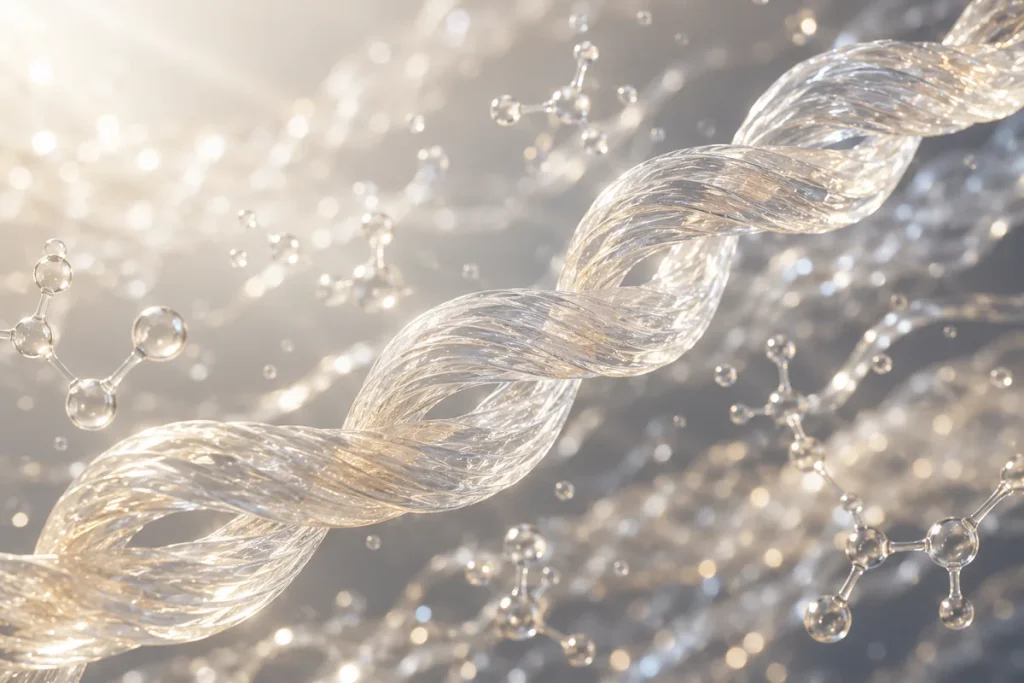
What makes collagen unique is its triple-helix structure. Three protein chains wind around each other to form an extremely strong fibre. At a microscopic level, it can be compared to a braided cable made up of several intertwined strands. This structure enables it to withstand significant mechanical stress whilst retaining a degree of flexibility.
Like all proteins, collagen is made up of amino acids. Three of these play a key role:
Its role extends far beyond the realm of beauty. In the skin, it is one of the main components of the dermis and contributes to the skin’s firmness, elasticity and resilience. In bones, it accounts for around 90% of the organic matrix and acts as a framework to which minerals attach. In joints, it helps with shock absorption and contributes to the structure of cartilage. In tendons and ligaments, it gives them their exceptional strength.
At what age do we start to lose collagen?
One of the most common misconceptions is that collagen loss only begins after the age of 50. In reality, research shows that natural collagen production starts to decline from around the age of 25, at a rate estimated at around 1% per year. The effects become progressively more noticeable over time.
Why does the production of collagen decrease with age?
The decline in collagen is not solely linked to chronological ageing. Several biological mechanisms gradually combine over the years.
As we get older, fibroblasts – the cells responsible for producing collagen – become less active. Natural collagen production then gradually slows down.
At the same time, oxidative stress caused by UV rays, pollution, smoking or certain lifestyle habits contributes to the breakdown of existing fibres.
Les changements hormonaux jouent également un rôle important. Chez les femmes, la baisse des œstrogènes observée lors de la ménopause est notamment associée à une accélération de la perte de collagène cutané.
Finally, glycation—a process exacerbated by a chronic excess of sugar—gradually stiffens collagen fibres and reduces their effectiveness.
All of these factors explain why the quality and quantity of collagen gradually decline over the years.
Factors that accelerate collagen loss
What you need to remember
✓ Collagen is the most abundant structural protein in the human body.
✓ Il représente environ 30 % de l’ensemble des protéines de l’organisme.
✓ More than 28 types of collagen have been identified to date.
✓ Types I, II and III are the most common and most widely studied forms in the fields of skin, bone and joints.
✓ Its triple-helix structure gives it remarkable strength.
✓ Natural production begins to decline gradually from the age of 25.
✓ A number of everyday factors can speed up its deterioration.
✓ Its role extends far beyond the realm of beauty and affects many tissues in the body.
To date, researchers have identified more than 28 different types of collagen in the human body. However, not all of them are of equal interest to the general public or in the field of dietary supplements.
Types I, II and III account for the vast majority of collagen in the body and are the most widely studied in relation to the skin, joints, bones and connective tissues. Types V and X are also attracting growing interest due to their presence in certain specialised tissues.
The other types of collagen (IV, VI, VII, VIII, IX, XI, XII, XIII and subsequent types) play essential roles in various structures of the body, including cell membranes, blood vessels, muscles, kidneys, eyes and certain specialised tissues.
In addition to the various types of collagen, it is also important to distinguish the main sources used in the dietary supplements.

| Source | Types principalement présents | Special features |
| Marin | Type I | Widely used in beauty and wellness products for the skin |
| Cattle | Types I and III | A versatile approach to skin, bone and connective tissue |
| Pig | Types I and III | Profile similar to bovine collagen |
| Poultry | Mainly type II | Often used in joint supplements |
| Eggshell membrane (ESM®) | Types I, V and X | Contient naturellement de l’acide hyaluronique, de la glucosamine et de la chondroïtine |
It is therefore important not to confuse the different types of collagen (I, II, III, V, X, etc.) with the sources of collagen (marine, bovine, porcine, poultry or eggshell membrane). A single source may contain several types of collagen, each with its own specific characteristics and functions.
Type I collagen is the most abundant
Type I accounts for approximately 90% of the total collagen present in the body. It is found mainly in the skin, the bones, the tendons and the ligaments. Its main function is to ensure the strength, the firmness and the strength of the tissues.
Marine collagen is particularly rich in type I, which explains its use frequent in the products intended for beauty of the skin.
Type II collagen: the expert in joints
Type II is mainly found in cartilage. It contributes to shock absorption, joint flexibility and cartilage structure. It is the subject of particular research in fields relating to joint mobility and comfort.
Type III collagen: the partner of type I
Type III is often found alongside type I in muscles, organs and blood vessels. Its main function is related to the flexibility and elasticity of tissues.
Bovine collagen typically contains a natural combination of types I and III.
Collagens of types V and X
Type V helps to organise the collagen fibres in the skin and certain biological membranes.
Type X is associated with cartilage and certain mechanisms of bone mineralisation.
| Type | Main location | Main function |
| Type I | Skin, bones, tendons, ligaments | Strength and firmness |
| Type II | Cartilage | Mobility and shock absorption |
| Type III | Muscles, organs, blood vessels | Flexibility and elasticity |
| Type V | Skin, biological membranes | Fibre structure |
| Type X | Cartilage, bone | Structure and mineralisation |
The 5 types of collagen you really need to know about
Although more than 28 types of collagen have been identified, five of them are the focus of most interest in the fields of nutrition, wellbeing and dietary supplements.
| Type | Importance in the body | Main locations |
| Type I | Very high | Skin, bones, tendons, ligaments |
| Type II | High | Cartilage |
| Type III | High | Muscles, organs, blood vessels |
| Type V | Moderate | Skin, biological membranes |
| Type X | Moderate | Cartilage and bone tissue |
Types I, II and III alone account for the vast majority of the collagen found in the human body. This is why they are the most commonly used in dietary supplement formulations.
The main sources of collagen
Not all sources of collagen have the same characteristics.
Marine collagen
Extracted mainly from fish skin and scales, it consists predominantly of type I.
Its bioavailability is very high and it is particularly popular in the premium beauty formulations.
Important note: it is not recommended for people who are allergic to fish.
Bovine collagen
Obtained from bovine skin, bones and tendons, it consists mainly of types I and III.
Its versatile nature makes it particularly well-suited to sports formulations and holistic approaches.
The eggshell membrane (ESM®)
This natural membrane is one of the most comprehensive sources available.
It contains naturally some collagen of types I, V and X, but also contains hyaluronic acid, as well as glucosamine and chondroitin, which explains its growing popularity in the high-end formulations of the range, particularly for the joints.
Marine collagen or bovine collagen: which one should you choose?
The choice between marine collagen and bovine collagen depends mainly on your goals, on your dietary preferences and on the overall composition of the formula.
| Criterion | Marine Collagen | Collagen bovine |
| Main types | Type I | Types I and III |
| Origin | Fish | Cattle |
| Skin beauty | ★★★★★ | |
| Elasticity of the skin | ★★★★★ | ★★★★☆ |
| Bones and connective tissues | ★★★★☆ | ★★★★★ |
| Sport and recovery | ★★★☆☆ | ★★★★★ |
| Comprehensive approach | ★★★★☆ | ★★★★★ |
| Bioavailability | Very high | High |
| Main allergen | Fish | Generally contains no major allergens |
Le collagène marin est souvent privilégié dans les formulations orientées beauté de la peau grâce à sa richesse naturelle en collagène de type I.
Bovine collagen is generally chosen in the approaches that are more holistic and target simultaneously the connective tissues, the bones, the tendons and the ligaments.
A single source of collagen does not determine everything.
It is common to see the marine collagen presented as systematically superior to collagen from cattle. In fact, the quality of a dietary supplement depends also on many other factors:
A well-formulated collagen supplement with the correct dosage will generally be more effective than a product that relies solely on marketing claims about its origin.
What you need to remember
✓ There are more than 28 types of collagen.
✓ Types I, II and III are the most important for the general public.
✓ Type I accounts for approximately 90% of the total collagen present in the body.
✓ Marine collagen is particularly popular for its formulas designed for beauty for the skin.
✓ Bovine collagen offers a profile that is more versatile for a comprehensive approach.
✓ The egg shell membrane provides naturally several types of collagen as well as other compounds of interest. a9> other compounds of interest.
✓ The choice of a collagen depends as much on its quality, its dosage and its its traceability as well as its origin.
Of all the fields studied by the researchers, the skin is the one that currently benefits from level of scientific evidence the most robust. Research has been increasing over the course of the last twenty years, and the results are sufficiently consistent to transcend the status of a mere fad.

The skin consists of three main layers. The epidermis is the visible outer layer, acting as a barrier against external aggressions. The dermis lies just beneath it: this is where most of the skin’s collagen is found, along with elastin fibres, hyaluronic acid and fibroblasts. The hypodermis, the deepest layer, mainly contains fat cells and supporting tissue.
Fibroblasts are cells specialised in producing collagen, elastin and certain components of the dermis. When we are young, their activity is particularly high. As we age, their effectiveness gradually declines, which explains the natural decline in the skin’s collagen production.
For a long time, scientists believed that ingested collagen was simply digested like any other dietary protein. Recent research has refined this understanding. After ingestion, hydrolysed collagen is broken down into specific peptides which are absorbed in the gut, enter the bloodstream and can reach the skin tissue. These peptides act as biological signals to fibroblasts, stimulating the synthesis of new collagen and hyaluronic acid. This biostimulation mechanism is now one of the most active areas of research in this field.
The most rigorous studies are double-blind, randomised clinical trials, often conducted over periods of 8 to 12 weeks. The main findings observed are as follows:
Elasticity refers to the skin’s ability to return to its original shape after being stretched. It is the most widely studied criterion and the one for which the evidence is strongest. The study by Proksch et al. (2014), published in Skin Pharmacology and Physiology, observed a significant improvement in skin elasticity compared to the placebo group after 8 weeks of supplementation with specific collagen peptides.
Hydration plays an important role in skin comfort and overall skin appearance. Studies consistently show an improvement in hydration following prolonged supplementation, with noticeable results from 6 to 8 weeks onwards. This effect is partly explained by the stimulation of hyaluronic acid production in the dermis.
Some studies using ultrasound have observed positive positive changes in certain markers associated with dermal density. These results suggest a a16> possible increase in the concentration of fibres of collagen in the dermis, although the exact mechanisms remain to be clarified.
The results regarding the visible reduction of wrinkles vary across studies. The level of evidence is classified as moderate. The improvements observed are generally subtle and gradual rather than dramatic, which highlights the importance of having realistic expectations.
| Field studied | Level of exam |
| Elasticity of the skin | Pupil |
| Hydration | Pupil |
| Skin density | Moderate to high |
| Texture of the skin | Moderate |
| General appearance | Moderate |
| Reduction in wrinkles | Moderate |
UV rays are likely the main external factor contributing to collagen breakdown. They promote oxidative stress, inflammation and the activation of enzymes known as matrix metalloproteinases (MMPs), which actively break down collagen fibres. This phenomenon, known as photoageing, can significantly accelerate the loss of skin density.
Smoking reduces tissue oxygenation and increases oxidative stress, two mechanisms that directly accelerate collagen breakdown.
A chronic excess of sugar promotes a process known as glycation. Glucose molecules bind to collagen fibres, gradually making them stiffer and less functional. This process, known as the formation of advanced glycation end products (AGEs), contributes to premature skin ageing.
Sleep is one of the most important periods for the body’s natural tissue repair processes. Insufficient or poor-quality sleep disrupts fibroblast regeneration.
Collagen never works alone. Several cofactors are essential for its normal synthesis:
Marine Collagen Beauty Glow Essence® is the Sashinah formula specifically designed to promote beautiful skin. It combines Peptan® F marine collagen (type I), vitamin C, hyaluronic acid, zinc, biotin, vitamin A, selenium and B vitamins. This combination has been developed for those wishing to take a holistic approach to skin beauty.
Even before it became a popular ingredient in beauty products, collagen was already the subject of extensive research in the fields of mobility, joint comfort and physical recovery.

The human body is subjected to thousands of mechanical stresses every day. Walking, climbing stairs, running and standing up from a chair place constant strain on the joints, bones, tendons, ligaments and muscles. Collagen is present in each of these tissues and acts as an essential structural component.
Joint cartilage is mainly composed of water, type II collagen, proteoglycans and specialised cells known as chondrocytes. It plays a vital role: absorbing shocks, distributing mechanical stress and enabling smooth movement. Without this structure, every movement would cause significant friction between the bones.
Cartilage has an important biological characteristic: it is avascular, meaning it contains no blood vessels. Its regeneration is therefore much slower than that of other tissues, which explains why the effects of supplementation generally take several weeks to several months to become noticeable.
The study by Bello & Oesser (2006) in Clinical Interventions in Aging, focusing on hydrolysed collagen and joint tissues, is one of the references that are most frequently cited in this field. Generally speaking, researchers are interested in several criteria: joint comfort, mobility, flexibility of movements and recovery after exercise. The results the most interesting are generally observed after several weeks or several months of regular use.
| Field studied | Level of exam |
| Joint mobility | Moderate |
| Comfort for the joints | Moderate to high |
| Athletes | Moderate |
| Cartilage quality | Promising |
| Flexibility of movement | Moderate |
Contrary to popular belief, bones are not made up solely of calcium. Type I collagen accounts for around 90% of their organic matrix and acts as a scaffold to which minerals attach. Without this structure, bones would be much more fragile and would shatter like glass. The study by König et al. (2018), published in Nutrients, observed positive effects of specific collagen peptides on bone mineral density in postmenopausal women, suggesting potential benefits in a holistic approach to bone health.
Athletes are interested in collagen for one simple reason: whilst muscles adapt relatively quickly to training, tendons and ligaments—which are rich in collagen—take much longer to do so. This discrepancy explains why tendon injuries are common among athletes who progress too quickly.
The study by Shaw et al. (2017), published in the American Journal of Clinical Nutrition, showed that supplementation with vitamin C-enriched gelatine, taken approximately one hour before exercise, significantly increased collagen synthesis in tendons. This finding has reinforced the value of protocols combining collagen and vitamin C in the context of sports recovery.
The most widely studied protocols generally involve taking 10 to 15 g of hydrolysed collagen combined with vitamin C, consumed regularly over several weeks.
Collagen Flexura® has been developed for people looking for a formula designed to support mobility and joint comfort. Its formulation combines Peptan® B, glucosamine, MSM, chondroitin, vitamin C, vitamin D3, vitamin E and B vitamins.
Multi-Collagen Synergy® is the most comprehensive formula in the range. It combines Peptan® B, Peptan® F, Colartix® and ESM®, naturally providing types I, II, III, V and X. It is designed for people who wish to support their skin, joints and connective tissues simultaneously.
The collagen market has been growing spectacularly for several years. For consumers, this abundance of products is often a source of confusion. How can you tell a genuine product from mere marketing hype?
The differences between products may relate to the source, the type of collagen, the manufacturing process, the quality of raw materials, the dosage, the ingredients used and traceability. The price alone does not allow us to judge the quality of a product.
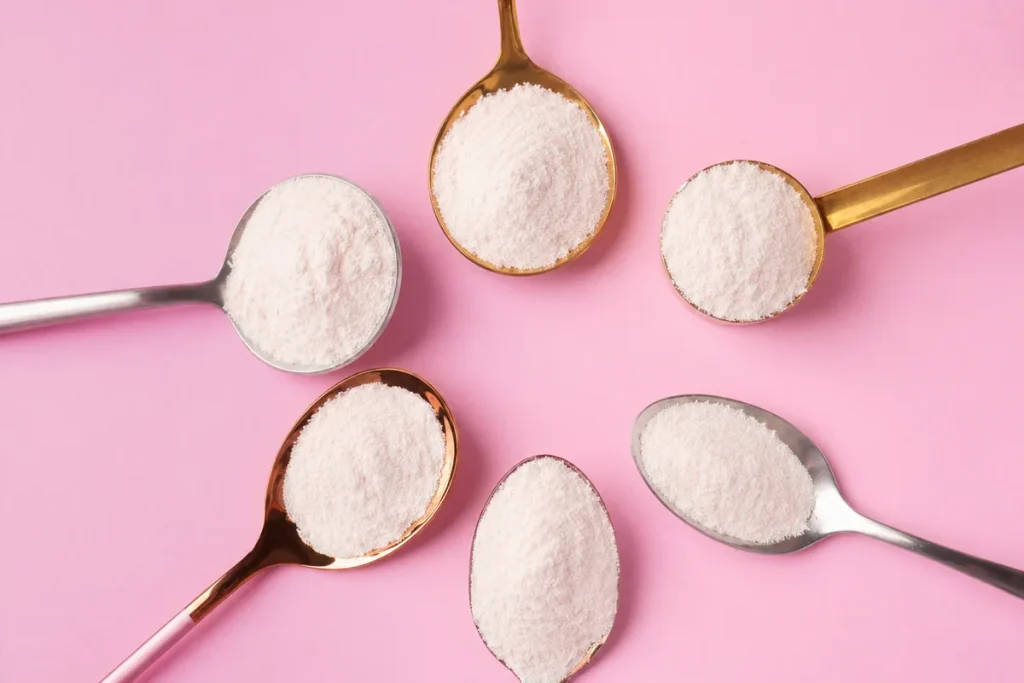
The source is one of the most important criteria. The choice between marine, bovine, bovine cartilage or eggshell membrane depends primarily on the intended purpose (see table in section 2).
Hydrolysed collagen is broken down into smaller peptides, making it easier to dissolve and absorb. It is currently the most widely available form on the market and the one that has been most extensively studied scientifically. Undenatured collagen retains its native structure and is mainly studied in certain specific joint applications with different mechanisms of action.
Criterion 3: the molecular weight
The molecular weight corresponds to the average size of collagen peptides following hydrolysis. It is expressed in daltons (Da). Generally speaking, the smaller the peptides, the easier they are to dissolve and for the body to absorb.
However, the molecular weight does not in itself the sole indicator of quality. The source of collagen, the manufacturing process, the traceability of raw materials, the dosage and the level of scientific documentation are also criteria that are essential to take into account.
| Molecular weight | General specifications |
| > 5000 Da | Larger peptides |
| 2,000 to 5,000 Da | Medium size, commonly used in food supplements |
| < 2000 Da | Small peptides, valued for their excellent solubility |
Modern hydrolysed collagens generally use peptides with a molecular weight of between 2,000 and 5,000 Da. Certain premium raw materials, such as the Peptan® collagen peptides used in several Sashinah formulations, have a molecular weight of 2,000 Da and are backed by extensive scientific evidence.
Key takeaways
A reputable brand should be able to specify the source of the collagen, the manufacturer, the supply chain and the quality controls carried out. Transparency is often one of the best indicators of trust.
Not all raw materials are backed by the same level of scientific evidence. Some have been the subject of clinical studies published in peer-reviewed journals. This is particularly true of Peptan® (Rousselot) and Colartix® collagens, which are supported by a robust scientific dossier. A well-documented ingredient generally offers greater assurance than an unproven raw material.
Criterion 6: additional ingredients
Vitamin C is the most important cofactor; its inclusion in the formula is virtually essential. Hyaluronic acid is frequently found in beauty products. Zinc and biotin help maintain healthy skin. Vitamin D is particularly beneficial for joint and bone health.
The most comprehensive formulas generally combine several of these ingredients to provide a more holistic approach. Some brands also favour scientifically recognised and documented raw materials, such as Peptan®, Colartix® or ESM®, which are used in many premium formulations.
Criterion 7: the transparency of the brand
Beyond dosage and composition, transparency is a key factor when choosing a dietary supplement. A reputable brand must be able to clearly state the origin of its ingredients, the raw materials used, and provide information that enables consumers to make an informed choice.
Dosage plays a key role and is often overlooked when choosing a product. Studies on skin health frequently use doses of 2.5 g to 10 g per day. Sports nutrition protocols often use 10 to 15 g per day. Complete formulas generally contain between 5 and 15 g per serving.
| Your main objective | Sashinah Package |
| Skin beauty | Beauty Glow Essence® |
| Elasticity and shine | Beauty Glow Essence® |
| Joint mobility | Flexura® |
| Sport and recovery | Flexura® |
| Comprehensive approach | Collagen Synergy® |
| Skin + joints | Collagen Synergy® |
Part 6 – Frequently asked questions about collagen

Which is the best collagen for the skin?
Type I collagen is currently the most widely studied form of collagen in the field of skin care. Naturally present in the dermis, it plays a key role in the skin’s structure, firmness and elasticity.
Formulas based on hydrolysed marine collagen, which are rich in type I collagen, are often favoured in beauty-focused dietary supplements.
Which is the best collagen for the joints?
Formulations designed for joint health typically combine different sources of collagen with complementary ingredients such as glucosamine, chondroitin, MSM and eggshell membrane.
The choice depends primarily on your goals and the overall composition of the formula.
From what age can you start taking collagen?
The body’s natural production of collagen begins to decline gradually from around the age of 25.
However, most of people start to take an interest in it from the age of 30 to 35, when the first signs associated with ageing become more visible.
Can you take collagen after the age of 50?
Yes. As we get older, the body’s natural production of collagen continues to decline gradually. After the age of 50, this decline often becomes more pronounced, particularly in the skin, bones, joints and connective tissues.
Is collagen beneficial during the menopause?
The menopause is accompanied by a decline in oestrogen, a hormone involved in various biological processes related to tissue maintenance.
Some studies show that the loss of collagen in the skin can accelerate during this period. Many women therefore choose to incorporate collagen into a holistic approach comprising diet a18> holistic approach comprising a balanced diet, physical activity on a regular basis and a healthy lifestyle tailored to individual needs.
Does collagen make you fat?
No. Collagen is a protein and does not directly cause weight gain.
Depending on the product, a daily serving generally provides between 30 and 50 calories, which is a relatively small amount as part of a balanced diet.
How long does it take to see results?
Scientific studies generally observe the effects after several weeks of regular use.
For the skin, results are often assessed after 8 to 12 weeks. For joints and connective tissues, the observation periods are sometimes longer.
Consistency remains a key factor.
Should you take collagen every day?
Yes. Most studies use a daily dose. Taking the supplement regularly helps to replicate the conditions studied in clinical trials.
Should collagen be taken in the morning or in the evening?
There is no scientific evidence to suggest that any particular time of day is better than another.
The most important thing is to choose a time that is easy to fit into your routine so that you can ensure a regular intake.
Can you take collagen on an empty stomach?
Yes. Hydrolysed collagen can be taken on an empty stomach, during a meal or after a meal.
The scientific data currently available do not show any significant difference regarding its absorption depending on the time of consumption.
Can collagen be mixed with coffee or a hot drink?
Yes. Hydrolysed collagen peptides are generally suitable for use in everyday hot drinks such as coffee, tea or certain hot beverages.
Why combine collagen and vitamin C?
Vitamin C helps with the normal formation of collagen, which is necessary for a7> functioning of the skin, bones, of cartilage, of blood vessels and of gums.
That is why it is frequently included in high-quality formulations.
Does plant-based collagen actually exist?
No. Collagen is a protein that is exclusively of animal origin.
Products sometimes marketed under the name ‘plant-based collagen’ do not generally contain collagen, but rather nutrients designed to support its natural synthesis, such as vitamin C or certain amino acids.
Can athletes take collagen?
Yes. Athletes are among the most frequent users of collagen supplements, particularly because of the significant strain placed on their tendons, ligaments, cartilage and connective tissues.
Can you take collagen all year round?
Many people opt for regular, long-term use.
However, it is important to follow the manufacturer’s instructions and seek advice from a healthcare professional in specific circumstances.
Does collagen replace a balanced diet?
No. No dietary supplement can replace a diet that is varied and balanced, a regular physical activity, a good quality sleep and a healthy lifestyle.
Collagen forms part of a holistic approach to wellbeing, but is not a substitute for these fundamentals.
Key points to remember
✓ Collagen is the most abundant structural protein in the human body.
✓ It accounts for around 30% of the body’s proteins.
✓ More than 28 types of collagen have been identified to date.
✓ Types I, II and III are the most important for the skin, the joints and the connective tissues.
✓ Natural production begins to decline gradually from the age of 25.
✓ The areas that are best documented scientifically relate mainly to the elasticity and hydration of the skin.
✓ Bones, joints and supporting tissues are also the subject of extensive research.
✓ Vitamin C plays an essential role in the normal formation of collagen.
✓ The quality of a supplement depends just as much on its formulation, as much as its traceability and its dosage as its source.
✓ When choosing a collagen supplement, you should always select one that suits your main goal.
Who might be interested in collagen?
Collagen is suitable for all those people wishing to support naturally the development of their body over the course a12> over time, whether it be a matter of preserving the quality of their skin, to support their connective tissues or to maintain good mobility in everyday life.
This may in particular be of interest to:
Our range of collagens includes in particular:
Conclusion
Collagen is much more than just a passing fad. It is one of the body’s most important proteins and plays a key role in the structure of many tissues, such as the skin, bones, tendons, ligaments and cartilage.
Scientific knowledge accumulated over recent decades has led to a better understanding of its role and the mechanisms involved in its natural synthesis. Although no dietary supplement can halt biological ageing, certain lifestyle habits can help to support the long-term maintenance of tissues over time.
A balanced diet, regular physical activity, a good night’s sleep, appropriate sun protection and consistent a14> supplementation consistent form the foundations of a holistic approach to well-being.
At Sashinah, our approach is based on a rigorous selection of raw materials, oftransparent formulations and ingredients backed by well-established scientific evidence. Our aim is to offer high-quality products that enable everyone a27> to make an informed choice, based on reliable information rather than excessive promises.
Proksch et al.. (2014). Oral Supplementation of Specific Collagen Peptides Has Beneficial Effects on Human Skin Physiology. Skin Pharmacology and Physiology.
Zague V. (2008). A New View Concerning the Effects of Collagen Hydrolysate Intake on Skin Properties. Journal of Cosmetic Dermatology.
Bello A.E. & Oesser S. (2006). Collagen Hydrolysate for the Treatment of Osteoarthritis and Other Joint Disorders. Clinical Interventions in Aging.
Dar Q.A. et al. (2017). Daily Oral Consumption of Hydrolyzed Type I Collagen Is Chondroprotective and Anti-Inflammatory in Murine Posttraumatic Osteoarthritis. Osteoarthritis and Cartilage.
Shaw G. et al. (2017). Vitamin C-Enriched Gelatin Supplementation Before Intermittent Activity Augments Collagen Synthesis. American Journal of Clinical Nutrition.
König et al. (2018). Specific Collagen Peptides Improve Bone Mineral Density and Bone Markers in Postmenopausal Women. Nutrients.
Disclaimer: This article is provided for informational and educational purposes only. It does not constitute medical advice and is not a substitute for the advice of a healthcare professional. Consult a qualified professional before taking any supplements, particularly if you are pregnant, breastfeeding, undergoing medical treatment or have a specific medical condition.