
Maintain your skin’s radiance, suppleness and comfort every day
Tightness after a shower, a dull complexion, a feeling of discomfort or the appearance of fine lines around the eyes: these signs are common and can affect all skin types, at any age.
The skin is much more than just a protective covering. As a natural barrier between our bodies and the outside world, it protects us from environmental stressors, helps regulate body temperature and plays a vital role in our appearance.
To carry out these functions properly, it needs one essential element: water.
Properly moisturised skin generally looks more radiant, supple and comfortable. Conversely, when it lacks moisture, it can become more sensitive and rough, and gradually lose its natural radiance.
Contrary to popular belief, skin hydration does not depend solely on the skincare products applied to the skin’s surface. Diet, daily fluid intake, lifestyle and certain nutrients also play an important role.
In this comprehensive guide, find out how to recognise the signs of dehydrated skin, understand what causes it, and adopt the right habits to maintain its natural balance in the long term.
Dry skin or dehydrated skin: what’s the difference?
These two terms are often used as synonyms, even though they refer to different situations.
Dry skin is a skin type characterised by insufficient production of lipids, particularly sebum. This condition is generally linked to genetics and is observed throughout a person’s life.
Dehydrated skin, on the other hand, is caused by a lack of water. It is a temporary condition that can affect all skin types, including combination or oily skin.
A person can therefore have oily but dehydrated skin.
This distinction is important because the solutions to be implemented are not exactly the same.
What are the signs of dehydrated skin?
More noticeable fine lines
Fine lines caused by dehydration often appear around the eyes or lips. They are generally finer than wrinkles caused by skin ageing.
A tight, pulling sensation
After washing your face or having a shower, your skin may feel uncomfortable and lack suppleness.
A dull complexion
When the skin is dehydrated, its natural renewal process can be disrupted. The complexion then appears less even and less radiant.
A loss of elasticity
Well-hydrated skin retains its plump appearance better. If it is dehydrated, it may appear thinner and less supple.
An uneven texture
Certain areas of the face can sometimes feel rougher or grainier to the touch.
Why does the skin become dehydrated?
The skin naturally has a hydrolipidic film that acts as a protective shield.
When this barrier is compromised, water evaporates more quickly. This phenomenon is known as insensible water loss.
Several factors can contribute to this dehydration:
Hydrating your skin from within: good daily habits
When we think about skin hydration, creams and serums immediately spring to mind. However, the skin’s beauty and comfort also depend on many internal factors.
Drink enough water
Requirements vary depending on age, climate and physical activity, but it is generally recommended to drink around 1.5 to 2 litres of water a day.
Staying well-hydrated every day is an important foundation for general well-being.
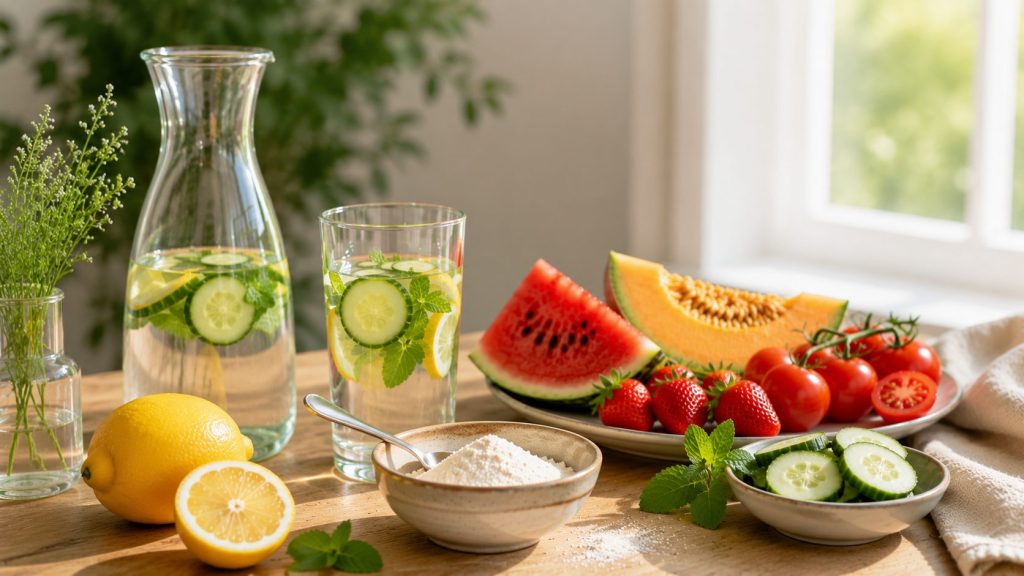
Foods that are naturally high in water
Fruit and vegetables also contribute to our daily fluid intake.
| Food | Water |
| Cucumber | 96 % |
| Lettuce | 95 % |
| Tomato | 94 % |
| Courgette | 94 % |
| Watermelon | 92 % |
| Melon | 90 % |
| Strawberry | 91 % |
Why does the skin naturally lose water?
Even when we are properly hydrated, the skin naturally loses a small amount of water throughout the day.
This phenomenon is known as insensible water loss.
When the hydrolipidic film is compromised, this loss increases and the skin becomes more vulnerable to external aggressions.
Air conditioning and heating: often underestimated enemies
The dry air produced by heating or air-conditioning systems promotes the evaporation of water from the skin’s surface.
This situation is particularly common:
Physical activity and skin hydration
Regular physical activity contributes to general well-being and improves blood circulation.
However, physical exertion also leads to water loss through sweating.
It is therefore essential to drink enough before, during and after exercise.
Essential nutrients for maintaining a radiant complexion
Collagen
Collagen is the most abundant protein in the human body.
It forms part of the structure of the dermis and is a major component of the skin.
As we get older, our natural production of it gradually decreases.
Vitamin C
Vitamin C contributes to the normal formation of collagen to ensure the skin functions normally.
It also helps to protect cells against oxidative stress.
Zinc
Zinc helps to maintain healthy skin.
Biotin
Biotin also helps to maintain healthy skin.
Omega-3s
Omega-3 fatty acids play a part in the structure of cell membranes.
Hyaluronic acid
Hyaluronic acid, which occurs naturally in the skin, is known for its ability to retain water.
The microbiota: an often-overlooked factor
Recent research highlights the links between the gut and the skin.
A diet rich in fibre, fruit, vegetables and fermented foods helps to maintain a balanced gut microbiota.
Skin ageing: why does the skin change as we get older?
From adulthood onwards, a number of processes gradually slow down:
These changes are part of the natural ageing process.
The most common mistakes to avoid
Using water that is too hot
Very hot showers can weaken the skin’s protective barrier.
Neglecting sun protection
UV rays are among the main factors contributing to premature ageing.
Using harsh products
Over-cleansing can upset the skin’s balance.
Not getting enough sleep
Sleep plays a major role in cell renewal.
A simple routine to keep your skin moisturised
In the morning
During the day
In the evening
Frequently Asked Questions about Skin Hydration
How can I tell if my skin is dehydrated?
The main signs are the tightness, the fine lines caused by dehydration, a dull complexion and a lack of comfort.
Can you have oily yet dehydrated skin?
Yes, even oily skin can be dehydrated.
How much water should you drink every day?
Around 1.5 to 2 litres a day, depending on individual needs.
Which foods should you prioritise?
Fruit, water-rich vegetables and foods containing omega-3.
Is collagen naturally present in the skin?
Yes, it is one of the main proteins in the dermis.
Discover our range of collagen SASHINAH®
If you’d like to enhance your beauty routine, discover our formula, developed using carefully selected ingredients:
• Marine Collagen Beauty Glow Essence: a formula combining marine collagen peptides, with vitamin C, with hyaluronic acid, zinc and biotin, designed to complement your beauty routine on a daily basis.
→ Discover the Marine Collagen Beauty Glow Essence SASHINAH®
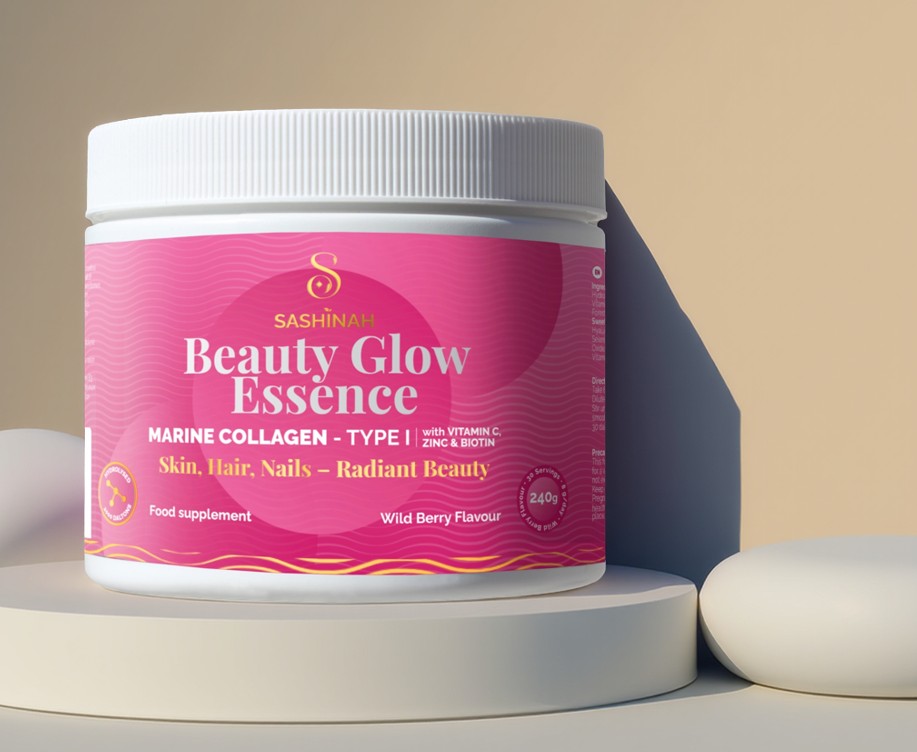
Would you like to explore other options? → Discover the full range of collagens SASHINAH®.
In a nutshell
Maintaining your skin’s moisture levels depends on several complementary factors: proper daily hydration, a balanced diet, an adequate intake of essential nutrients, protection against external aggressors, and a healthy lifestyle.
At SASHINAH®, we believe that a sustainable beauty routine is based on consistency, high-quality ingredients and a holistic approach to wellbeing.
Looking after your skin today means investing in its comfort, suppleness and natural radiance for years to come.