Matcha is a Japanese green tea powder made from leaves that are carefully grown in the shade and then finely ground. Unlike traditional green teas, where only the infused substances are consumed, matcha allows the whole leaf to be ingested. This unique feature explains its natural richness in plant compounds, antioxidants, vitamins and minerals.
For several centuries, it has held a central place in Japanese culture and the tea ceremony. Today, it is appreciated throughout the world for its unique flavour, its versatility and its nutritional benefits.
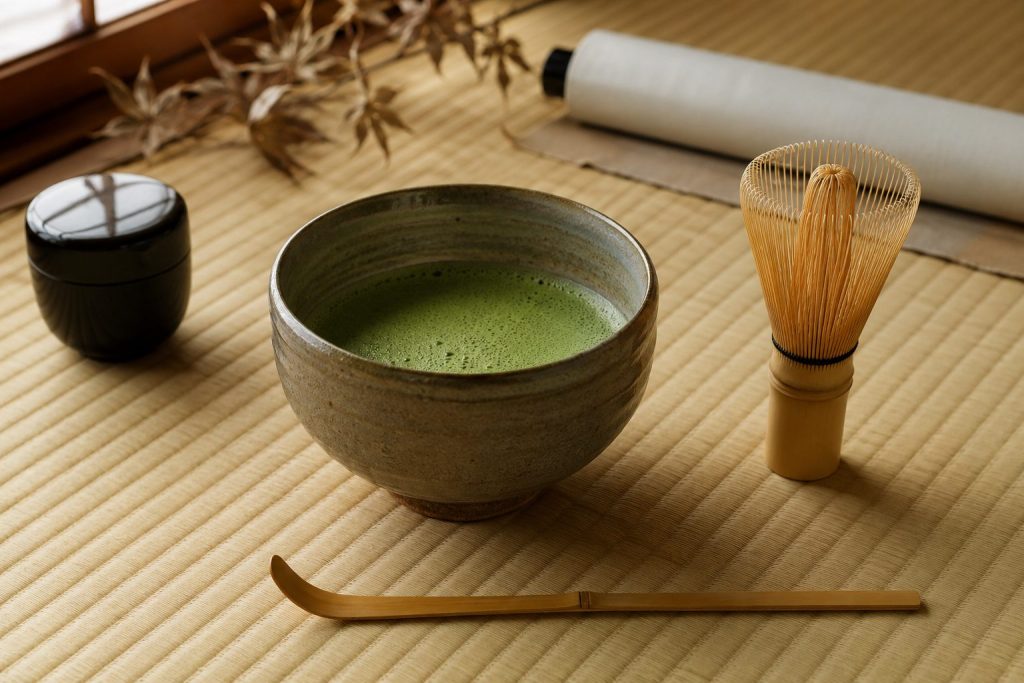
The origins of matcha in Japan
The history of matcha has its roots in China, where powdered tea gradually developed before reaching its peak during the Song dynasty (960–1279). At that time, tea leaves were ground into a fine powder and then whisked into hot water, a method that foreshadowed the traditional preparation of Japanese matcha.
It was at the end of the 12th century (in 1191) that the Japanese Zen Buddhist monk Eisai brought back tea seeds from China, along with this method of preparation. This introduction marked an important milestone in the history of tea in Japan. A few years later, in his work Kissa Yōjōki (‘Notes on Preserving Health through Tea Drinking’), Eisai presented tea as a drink beneficial to both body and mind.
Matcha thus came to occupy a special place in the practice of Zen Buddhism. Monks valued it as an aid to long periods of meditation, mindfulness and concentration. Whilst the tradition of powdered tea gradually disappeared in China over the following centuries, it was preserved and refined in Japan.
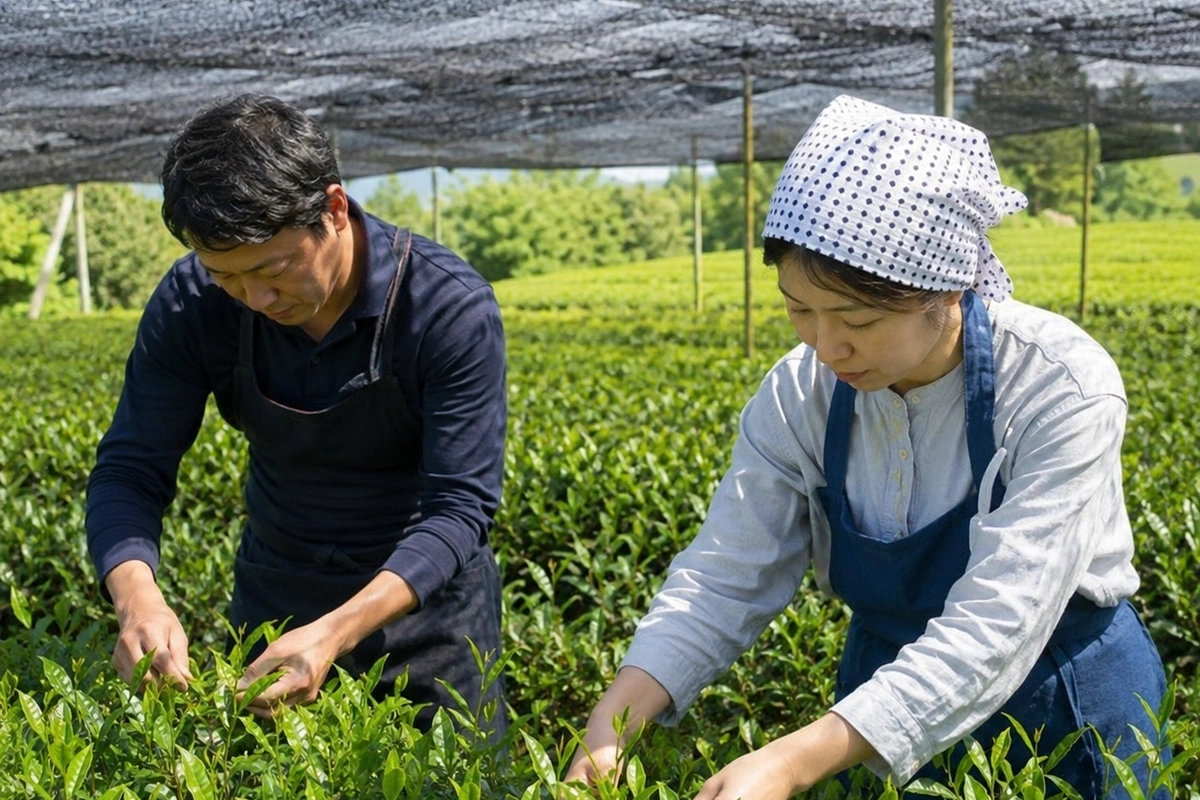
Over the centuries, Japanese tea growers developed specific cultivation methods, including shading the tea plants before harvest and grinding the leaves between stone millstones. These developments gradually gave rise to matcha as we know it today.
The custom of drinking matcha then spread amongst the samurai, the Japanese aristocracy and, eventually, the whole of society. From the 16th century onwards, the tea master Sen no Rikyū helped to codify the principles of the Japanese tea ceremony, known as Chanoyu (or Cha No Yu). This tradition is based on four fundamental values: harmony (wa), respect (kei), purity (sei) and serenity (jaku).
Unlike most green teas, which are simply steeped, matcha allows the whole tea leaf to be consumed in powder form. This distinctive feature contributes to its nutritional richness, its unique texture and its characteristic flavour profile.
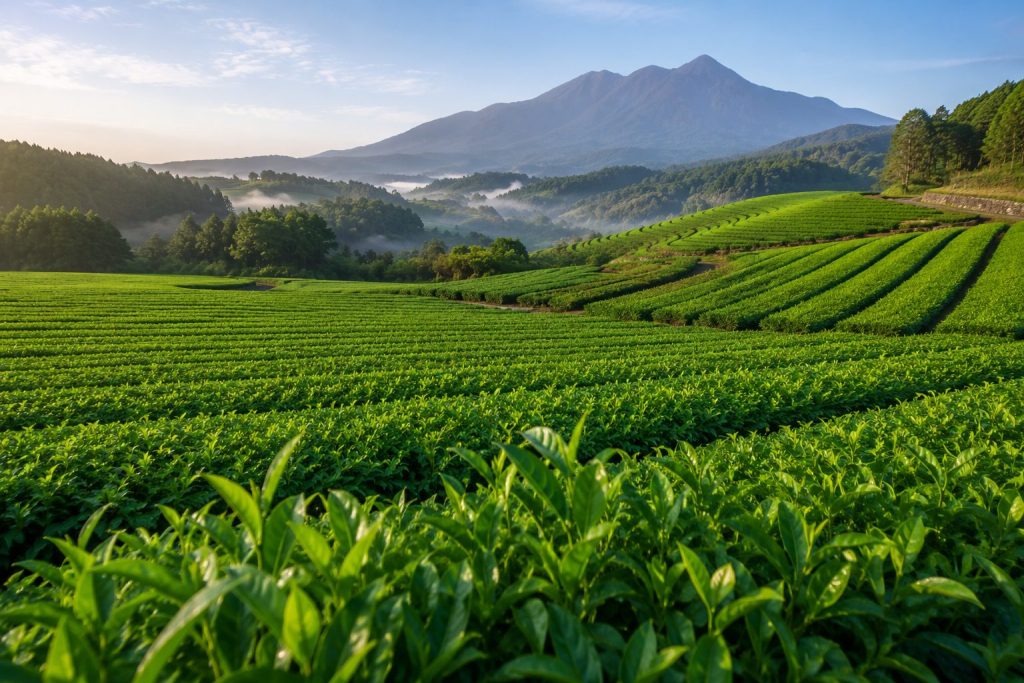
Today, matcha remains one of the most iconic symbols of Japanese culture. Produced mainly in renowned regions such as Uji, Nishio, Kagoshima and Shizuoka, it now appeals to consumers around the world thanks to its intense emerald green colour, its distinctive flavour and its deep connection to centuries of Japanese tradition.
Matcha naturally contains caffeine as well as a specific amino acid called L-theanine. This unique combination is attracting the interest of many consumers looking for an alternative to coffee. Whilst coffee is often associated with a rapid stimulating effect, matcha is valued for providing a more gradual and long-lasting burst of energy.
L-theanine is one of the most widely studied compounds in green tea. Researchers are particularly interested in its potential role in relaxation, attention and certain cognitive functions. This synergy explains why matcha is often consumed before an intellectual activity, a work session or a meditation session.
Average composition per 2 g of matcha
*Values may vary depending on the origin and grade of the matcha.
| Compound | Approximate quantity |
| Caffeine | 30 to 70 mg |
| L-theanine | 10 to 40 mg |
| Catechins | 100 to 250 mg |
| EGCG | 50 to 120 mg |
The figures given are averages observed in high-quality Japanese matcha. They may vary depending on the origin, cultivar, cultivation method and grade of the matcha.
Matcha is naturally rich in polyphenols, particularly catechins, including EGCG (epigallocatechin gallate). Antioxidants help to protect cells against oxidative stress, a natural phenomenon involved in many biological processes and studied in the context of cellular ageing.
Matcha also contains vitamins and plant pigments that contribute to its nutritional value. Among these is chlorophyll, which gives it its intense green colour; this is produced naturally through the practice of growing the tea plants in the shade for several weeks prior to harvest.
Matcha is often enjoyed by athletes and active people. Its natural caffeine content makes it a popular drink before a workout. Some research suggests that catechins and caffeine may play a role in the use of fat as an energy source during physical exercise.
Matcha is also frequently cited in studies on energy metabolism. Some research suggests that the catechins, when combined with caffeine, may help to slightly increase daily energy expenditure.
However, no single food can replace a balanced diet and a suitable exercise programme on its own. Matcha is part of an overall routine, not a substitute for it.
Coffee and matcha naturally contain caffeine, but their nutritional profiles are very different. The choice depends mainly on personal preference; in fact, many people alternate between the two depending on the time of day.
| Criterion | KASUMI | Coffee |
| Source | Whole leaf of green tea | Coffee bean |
| Antioxidants | Very rich in catechins | Present |
| L-theanine | Yes | No |
| Preparation | Powder used in its entirety | Infusion |
| Flavour | Plant-based, umami | Roasted |
| Energy | Progressive and sustainable | Fast and intense |
Not all matcha is created equal. The quality of the product affects not only its taste, but also its nutritional value and the overall tasting experience.
High-quality matcha is produced from carefully selected young leaves, grown in the shade to maximise their chlorophyll and amino acid content. After harvesting, the veins and stems are removed; only the finest parts are slowly ground to produce an extremely fine powder.
Top-quality matcha can be recognised by:
Not all matcha is intended for the same purpose. There are generally three main categories of quality:
| Grade | Recommended use | Features |
| Culinary | Recipes, pastries, mixed drinks | Strong flavour, more pronounced bitterness |
| Premium | Daily intake, matcha latte | A good balance between smoothness and aromatic richness |
| Ceremonial | Pure tasting, Japanese tradition | Exceptional finesse, smoothness, complex umami |
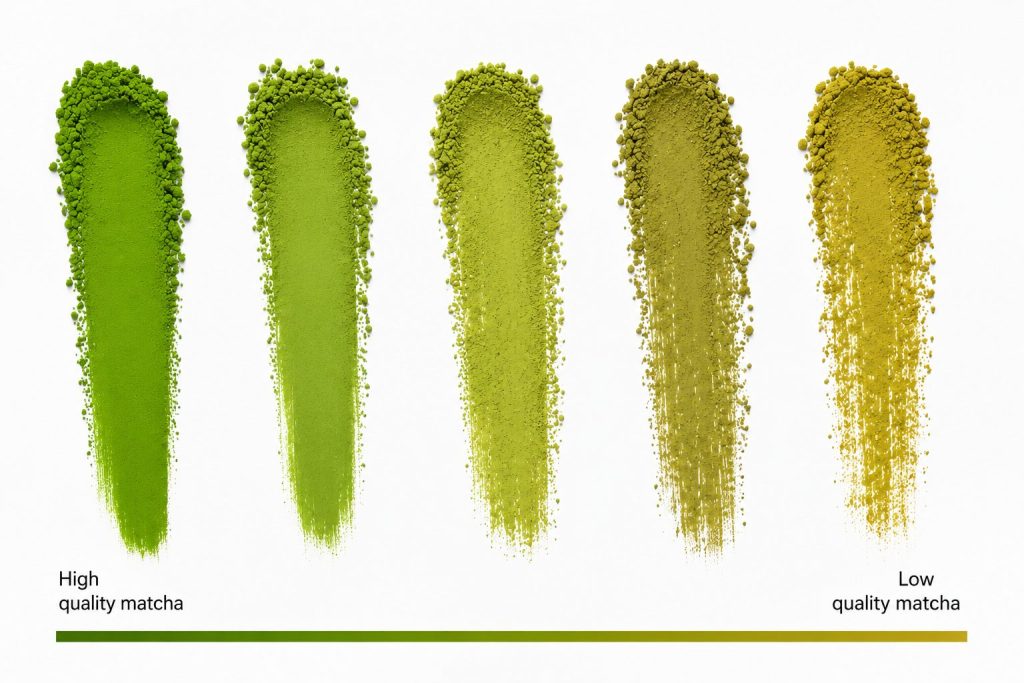
With the growing popularity of matcha, the range of products available has expanded considerably. Here are the key criteria for identifying an authentic product:
The popularity of matcha now extends far beyond the confines of the traditional Japanese tea ceremony. Many people incorporate it into their daily routine, whether at breakfast, before a workout, during the working day or whilst relaxing.
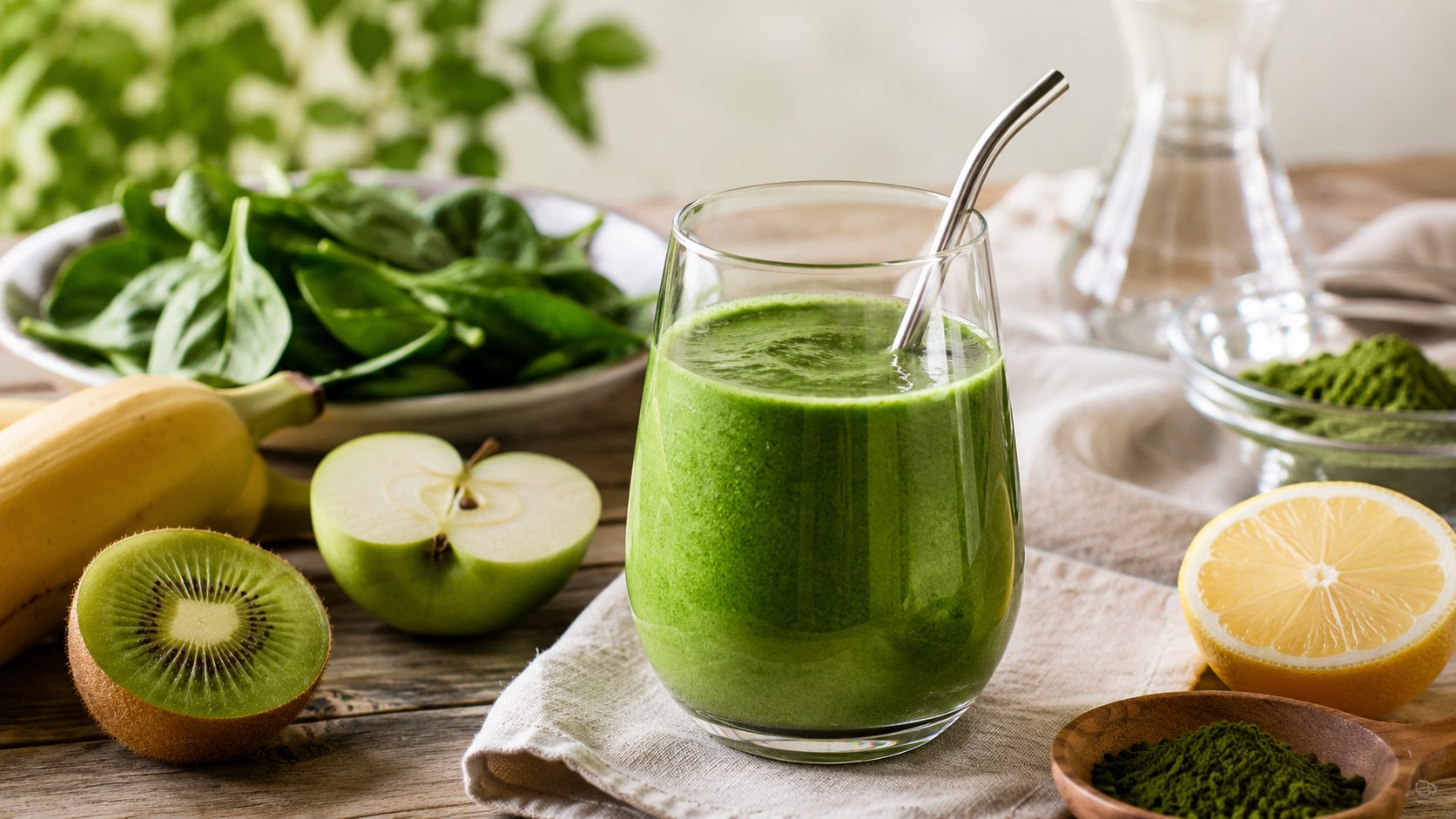
Its versatility means it can be enjoyed in a variety of ways: traditional matcha with water, matcha lattes, smoothies, porridge, desserts or iced drinks. As well as its nutritional benefits, matcha appeals because of the ritual involved in preparing it, which encourages you to slow down for a few moments.
Matcha is a food that is naturally rich in beneficial plant compounds. However, no single food can replace a balanced diet, regular physical activity and a healthy lifestyle.
The effects observed may vary from person to person depending on a number of factors: overall diet, lifestyle, physical activity, sleep and individual sensitivity to caffeine. Matcha therefore has a valuable place in an overall wellbeing routine, combined with healthy lifestyle habits.
FAQ – Everything you need to know about matcha
How much matcha can you drink a day?
Most consumers drink between one and two servings of matcha a day. The ideal amount depends, amongst other things, on individual sensitivity to caffeine, lifestyle and dietary habits. As with any drink that naturally contains caffeine, moderate consumption is recommended.
Does matcha contain caffeine?
Yes. Matcha naturally contains caffeine as it is made from green tea leaves. Depending on the amount used and the quality of the matcha, a serving of 1 to 2 grams generally provides between 30 and 70 mg of caffeine.
What is the difference between premium matcha and ceremonial matcha?
Premium matcha is generally intended for daily consumption and offers an excellent balance between smoothness, rich flavour and versatility.
Ceremonial matcha is traditionally regarded as the highest grade. It is made from the youngest and most delicate leaves, offering a particularly fine texture, low bitterness and a flavour rich in umami. It is often preferred for drinking on its own with water.
Is matcha better than coffee?
Matcha and coffee each have their own distinctive characteristics. Coffee is often appreciated for its rapid stimulating effect, whilst matcha is renowned for its natural combination of caffeine and L-theanine.
The choice depends above all on personal preferences, the desired flavour and when the drink is consumed. In fact, many people enjoy both drinks as complementary options.
How do you prepare traditional matcha?
To prepare a traditional matcha, pour approximately 1 to 2 grams of matcha into a bowl. Add 60 to 80 ml of hot water at a temperature of between 70 and 80 °C, then whisk vigorously with a bamboo whisk (chasen) until a light, smooth foam forms.
The matcha can then be enjoyed on its own to fully appreciate its flavours and texture.
What is the difference between matcha and ordinary green tea?
The main difference lies in how it is consumed. With traditional green tea, only the substances infused into the water are consumed. With matcha, the whole leaf is ground into a powder and then consumed in its entirety, giving it a distinctive flavour and nutritional profile.
Why is matcha bright green?
The deep green colour of matcha comes mainly from its naturally high chlorophyll content. Before harvesting, the tea plants are grown in the shade for several weeks, a traditional Japanese method that promotes the development of this plant pigment.
How should matcha be stored?
To preserve its freshness and flavour, it is recommended that you store matcha in its tightly sealed packaging, away from light, heat and moisture. Once opened, it is best to use it fairly quickly to fully enjoy its flavour.
References scientific:
• Kochman J. et al., Health Benefits and Chemical Composition of Matcha Green Tea, Molecules, 2020. A landmark review of the nutritional composition and main bioactive compounds of matcha.
https://www.mdpi.com/1420-3049/26/1/85
• Sokary S. et al., The Therapeutic Potential of Matcha Tea: A Critical Review on Human and Animal Studies, Current Research in Food Science, 2022. Analyse critique des recherches portant sur les effets du matcha sur les fonctions cognitives, le métabolisme et le stress oxydatif.
https://www.sciencedirect.com/science/article/pii/S2665927122002519
• Uchida K. et al., Effect of Matcha Green Tea on Cognitive Functions and Sleep Quality in Older Adults with Cognitive Decline, PLOS ONE, 2024. A randomised controlled trial investigating the effects of regular matcha consumption on certain cognitive functions and sleep quality.
https://journals.plos.org/plosone/article?id=10.1371/journal.pone.0309287
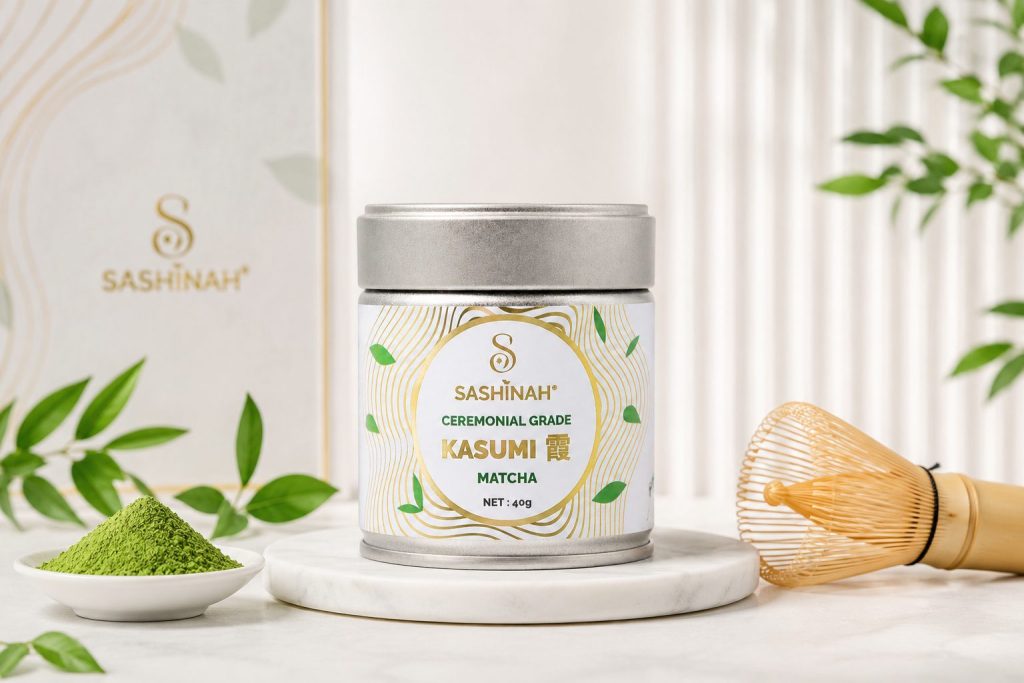
SASHINAH ceremonial matcha
At SASHINAH, we have selected a Japanese ceremonial matcha from a producer in the Kagoshima region, renowned for their expertise and commitment to quality.
Our matcha is selected according to strict criteria of quality, traceability and authenticity, to ensure a tasting experience that remains true to Japanese tradition.
Its natural emerald green colour, its exceptionally fine texture and its delicate vegetal and umami notes make it the perfect choice for a traditional tea tasting or a high-quality matcha latte.
Each batch is carefully selected to ensure consistent quality and a tasting experience that meets the expectations of Japanese matcha enthusiasts.
Our matcha is available in several sizes: